| MSME |
 +1 (862) 803-4148
  +91-9870443528

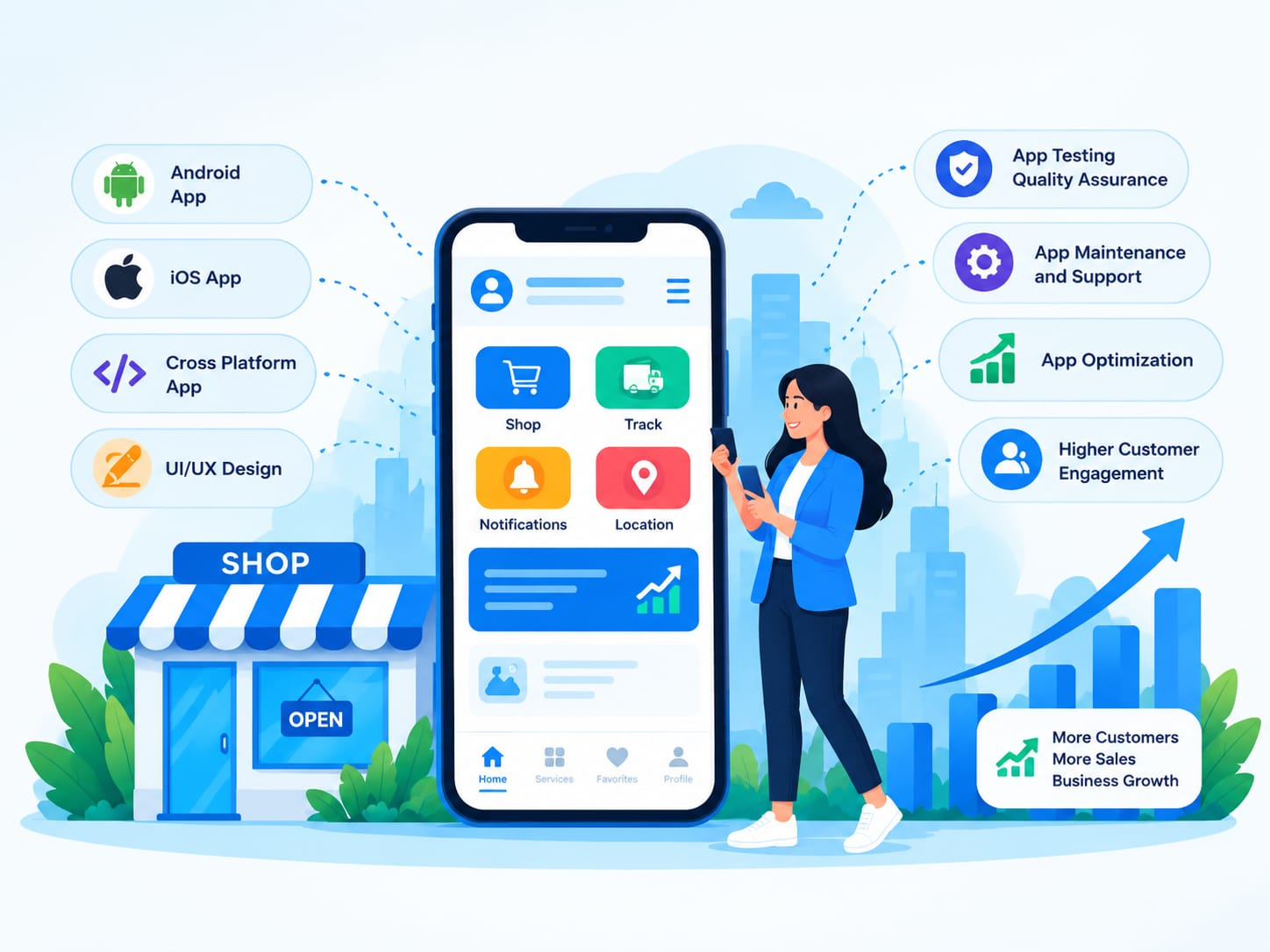
Mobile apps have quietly become one of the biggest drivers of business growth over the last few years. What used to be an optional extra for large brands is now something even small, local businesses rely on to reach customers, take orders, and build loyalty. Whether it's a retail store, a clinic, a logistics firm, or a coaching institute, having an app changes how a business is discovered and used every day.
This shift is exactly why more companies today are searching for a reliable mobile app development company in Mohali — the demand for well-built, fast, and secure apps keeps growing as more businesses move their core operations onto mobile.
Why Businesses Need Mobile Apps Now More Than Ever
Smartphones have become the primary device people use to browse, shop, and communicate, and customers now expect the businesses they deal with to be just as accessible on mobile as they are online. A well-designed app gives a business direct access to its customers, without an algorithm or a third-party platform standing in between.
It also opens the door to features a website simply can't offer as well, like push notifications, offline access, camera and location integration, and a generally faster, smoother experience for the user.
Types of Mobile Apps Businesses Choose From
Not every business needs the same kind of app, and understanding the options helps in making a smarter decision. Native apps, built specifically for Android or iOS, generally offer the best performance and the deepest access to a device's features, though they usually mean separate development for each platform.
Cross-platform frameworks like Flutter and React Native have become popular because they let a single codebase run on both Android and iOS, cutting down development time and cost while still delivering a smooth, near-native experience.
Hybrid apps, built using web technologies wrapped in a native shell, are the fastest and cheapest to build but tend to fall short on performance for more complex use cases.
The Typical App Development Process
Most successful app projects follow a fairly consistent path. It starts with discovery, where the business goals, target users, and core features are mapped out clearly. This is followed by UI/UX design, where wireframes and prototypes are created so the app's flow can be tested before a single line of code is written.
Development comes next, usually broken into short sprints so progress can be reviewed regularly rather than all at once at the end. Testing runs alongside and after development to catch bugs, security gaps, and performance issues, and once everything checks out, the app is submitted to the Google Play Store and Apple App Store.
Even after launch, ongoing maintenance, including bug fixes, OS compatibility updates, and new features, is what keeps an app relevant over time.
What Affects the Cost of Building an App
App development cost depends on a mix of factors: the number of platforms involved, the complexity of the features, whether the app needs to integrate with existing business systems, and how much custom design work is required.
A simple app with basic functionality will cost far less than one that needs real-time tracking, payment gateways, or AI-based features. It's also worth remembering that maintenance is a recurring cost rather than a one-time expense, since apps need regular updates to stay secure and compatible with new operating system versions.
Choosing the Right Development Partner
For businesses in Punjab specifically, choosing the right technology partner matters just as much as the idea itself. A good mobile app development company in Mohali will not only understand app development but also the local market — the kind of users a business is trying to reach, the devices they commonly use, and the features that actually matter to them.
Working with a team that offers end-to-end support, from planning through to post-launch maintenance, usually leads to a smoother project and a better long-term outcome than piecing the work together across multiple freelancers.
Mobile apps are no longer a "nice to have" for growing businesses; they're becoming a core part of how companies operate, sell, and stay connected with their customers.
Understanding the type of app that fits your business, the process involved, and the real cost factors makes it much easier to plan a project that actually delivers results, rather than one that stalls halfway through.
Taking the time to choose the right development approach, and the right partner, at the start pays off well beyond the app's launch day.